Targeted hands-on myofascial release, ischaemic trigger point compression, and sterile monofilament dry needling at Spark Medical Centre in Overport, Durban — releasing stubborn muscle knots, protective spasms, and chronic tension.
Assessment, Treatment & What to Expect
Select any section below to read the full clinical details.
How Myofascial Trigger Points Cause Referred Pain & Muscle Guarding
A myofascial trigger point is a hyperirritable, tightly contracted knot within a taut band of skeletal muscle fascia. Trigger points develop when a muscle is subjected to sustained postural overload (such as hunching over a laptop or steering wheel for hours), repetitive athletic strain, direct trauma, or protective guarding around an irritated spinal joint. Inside a trigger point, sustained sarcomere contraction restricts local capillary blood flow, leading to oxygen deprivation and a build-up of pain-sensitising biochemicals.
Beyond causing local tenderness when pressed, active myofascial trigger points produce characteristic patterns of referred pain. For example, trigger points in the upper trapezius and suboccipital muscles frequently refer throbbing pain into the temple and behind the eye; infraspinatus trigger points mimic deep shoulder joint pain; and gluteus medius or piriformis trigger points send aching pain down the hip and thigh.
- Upper trapezius, levator scapulae, and cervical trigger points causing stiff neck and tension headaches.
- Rhomboid and periscapular muscle knots causing burning pain between the shoulder blades.
- Quadratus lumborum, lumbar paraspinal, and gluteal trigger points driving lower back and hip spasms.
- Calf (gastrocnemius/soleus), hamstring, and iliotibial band tightness in runners and active patients.
Sterile Monofilament Dry Needling vs Manual Soft Tissue Release
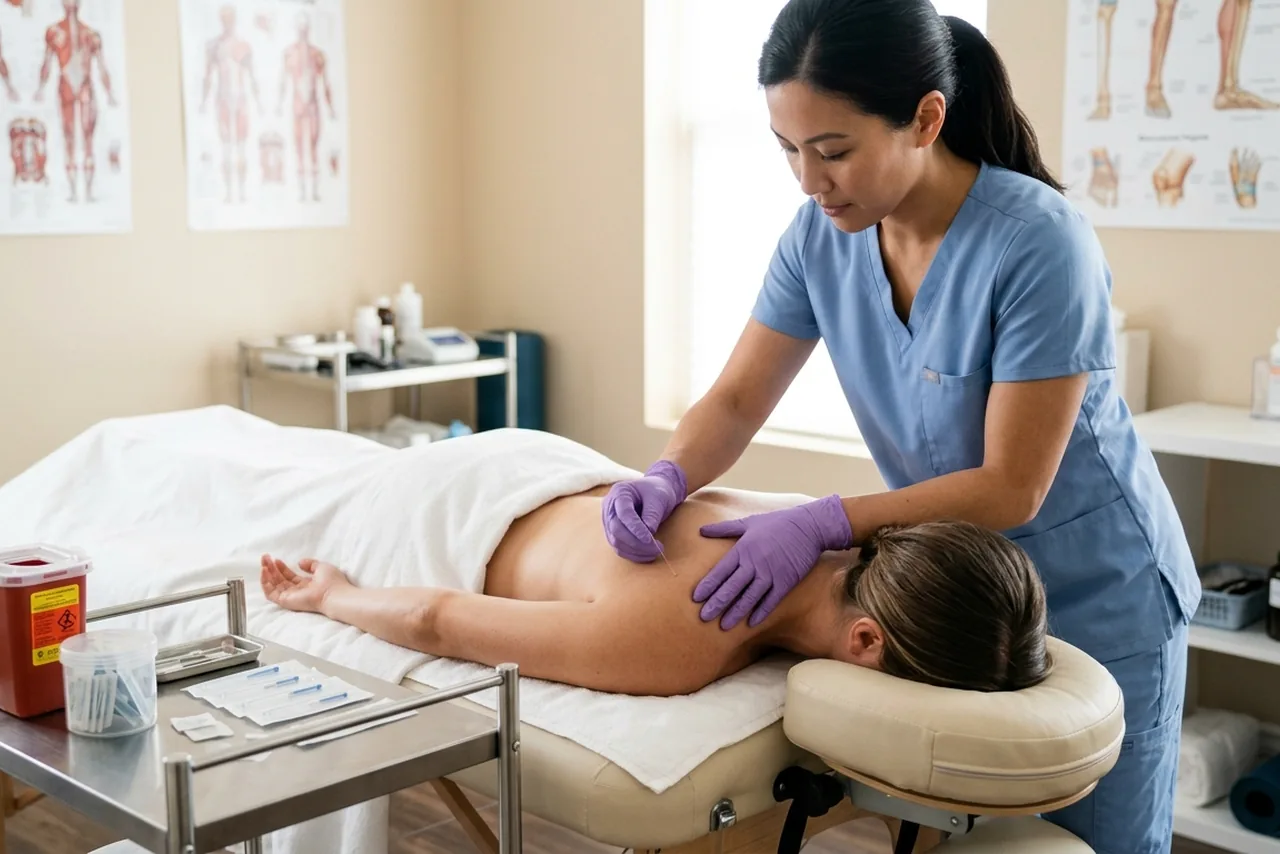
Myofascial dry needling is an evidence-informed clinical technique in which a fine, sterile, single-use filiform needle (containing no medication or injection fluid — hence the term 'dry') is gently inserted directly into a palpated myofascial trigger point. When the needle tip stimulates the contracted motor endplate zone, it frequently elicits a brief, involuntary spinal reflex known as a local twitch response. This twitch reflex breaks the sustained contraction cycle, improves local microcirculation, flushes out inflammatory mediators, and reduces electrical muscle hyperactivity.
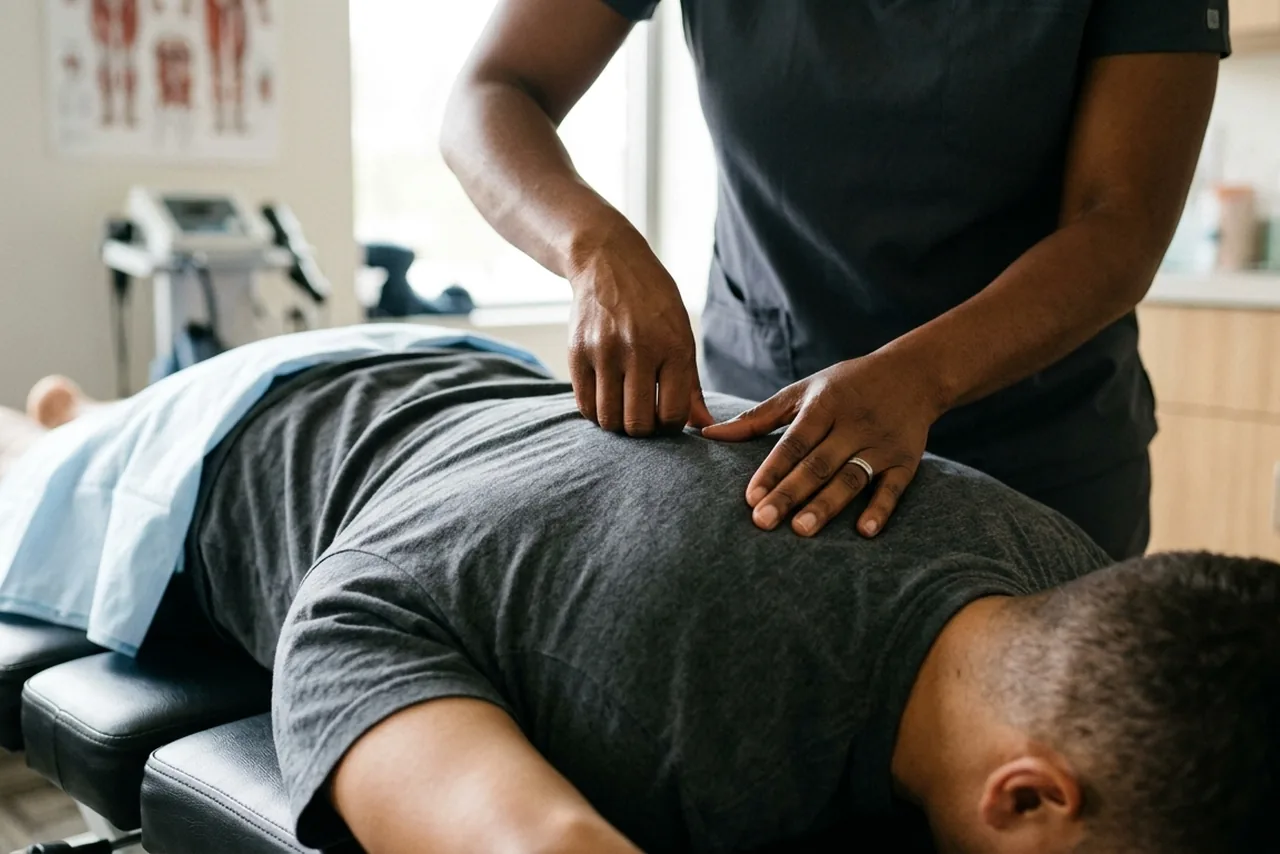
Alongside or as an alternative to dry needling, Dr Bongeka Khumalo performs manual soft tissue therapy — including sustained ischaemic trigger point compression, myofascial skin-rolling and fascial release, and cross-fibre massage. If a patient is needle-averse or has a medical contraindication to needling, manual soft tissue therapy paired with TENS electrotherapy and PNF stretching provides a thorough, comfortable non-needle alternative.
- Single-use, sterile, individually packaged surgical-grade monofilament needles disposed of in medical sharps containers.
- Strict skin preparation and infection-control protocols in accordance with AHPCSA clinical standards.
- Option of manual ischaemic compression and myofascial release for patients who prefer non-needle treatment.
Why Combining Muscle Release with Joint Manipulation Improves Lasting Relief
Joints and muscles function as an inseparable biomechanical unit. If a restricted spinal or peripheral joint is adjusted while the surrounding musculature remains locked in chronic myofascial spasm, the tight muscle fibres can quickly pull the joint back into restriction. Conversely, if only the muscle knot is needled or massaged while the underlying spinal facet joint remains jammed, the nervous system continues to trigger protective muscle guarding.
At Dr Bongeka Khumalo Chiropractic Practice, dry needling and soft tissue therapy are integrated directly with segmental joint mobilisation, spinal manipulation, and PNF stretching. By releasing the hyperirritable trigger point and restoring smooth joint glide within the same consultation, tissues relax more completely and functional range of motion is restored more sustainably.
- Prepares tight, guarded paraspinal and shoulder muscles so spinal adjustments require less force.
- Addresses both the articular (joint) and myofascial (muscle) drivers of chronic pain in one coordinated session.
- Reinforced with gentle PNF contract-relax stretching to reset resting muscle length.
Post-Needling Soreness, Hydration & Aftercare Recommendations
Following a myofascial dry needling session, it is completely normal to experience a dull, workout-like muscle ache over the treated area for 24 to 48 hours, particularly if strong local twitch responses were elicited in deep chronic knots. Once this brief post-needling soreness subsides, patients typically notice a marked reduction in resting muscle tension and freer, less painful movement.
To support comfortable tissue recovery after your appointment at Spark Medical Centre or our satellite clinics, Dr Khumalo recommends drinking plenty of water over the next 24 hours, applying a warm pack or taking a warm bath to encourage local blood flow, and performing gentle range-of-motion stretches rather than heavy eccentric gym training on the same day.
- Apply gentle moist heat for 15 to 20 minutes in the evening to soothe post-needling muscle soreness.
- Keep well hydrated and perform light, pain-free movement to promote metabolic clearance in the muscle.
- Always inform Dr Khumalo beforehand if you take blood thinners, have a bleeding disorder, or are pregnant.
Ready when you are.
Contracted to most South African medical aids, with cash consultations also welcome.
Patients often ask
Is dry needling the same as traditional Chinese acupuncture?
While both use fine sterile monofilament needles, their clinical frameworks differ. Dry needling is a modern Western neuro-anatomical and musculoskeletal modality that targets specific palpated myofascial trigger points and motor endplates in tight muscles to release spasm and restore biomechanics.
Does myofascial dry needling hurt?
Because the monofilament needle is extremely thin and solid rather than hollow like a medical injection needle, passing through the skin is often barely felt. When the needle reaches an active trigger point, you may feel a brief, deep cramping or twitch sensation lasting a second or two, which is a positive sign that the muscle knot is releasing.
How long does post-needling muscle soreness last?
Mild, gym-like muscle stiffness at the needled site typically lasts between 24 and 48 hours. Staying hydrated, applying a warm compress, and doing gentle mobility stretches help it settle quickly.
Is dry needling covered as part of my chiropractic consultation on medical aid?
Yes. When clinically indicated as part of your chiropractic treatment session, dry needling and soft tissue therapy are included within our standard consultation coding and billed according to your medical aid scheme or private tariff.
Related care
Adjustments & spinal care
For stiff, locked or painful joints in the neck, mid-back, lower back and pelvis.

Back pain, neck pain & sciatica
Lower back ache, a stiff neck, or pain and tingling running down an arm or leg.

Sports injuries, shoulders & knees
Shoulder impingement, knee pain, Achilles trouble, sprains and getting back to training.
Let’s talk about your care
Consultations take place at our main rooms at Spark Lifestyle Centre, 98 Cannon Avenue, 5th Floor Medical Suite, Overport, Durban, as well as our scheduled regional satellite clinics.
Request an appointment
Fill this in and we’ll open a ready-to-send WhatsApp message to Dr Bongeka Khumalo’s reception. We reply during consulting hours.