
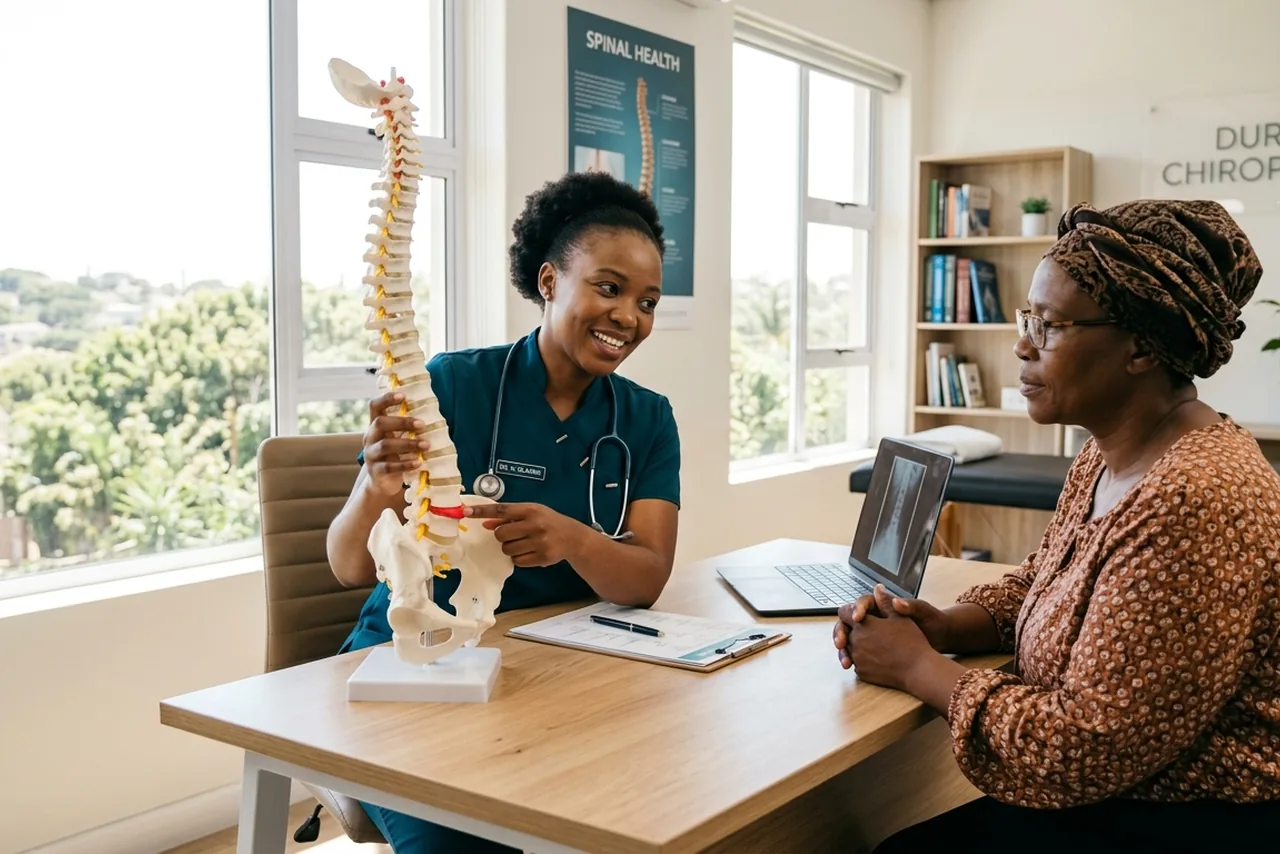
Evidence-informed conservative diagnosis and hands-on management for acute and chronic lower back pain, upper back and neck stiffness, sciatica, lumbar and cervical radiculopathy, intervertebral disc strain, and degenerative spondylosis.
Assessment, Treatment & What to Expect
Select any section below to read the full clinical details.
Understanding Mechanical Back Pain, Disc Strain & Sciatic Nerve Irritation
Lower back and neck pain are among the leading causes of work absence and reduced quality of life in South Africa. In clinical practice, spinal pain frequently arises from a combination of mechanical structures: overloaded lumbar or cervical facet joints, strained intervertebral discs, restricted sacroiliac joints, and hypertonic paraspinal or gluteal muscles locking up to guard the injured area. Without a structured assessment, patients often treat only the surface muscle ache while the underlying mechanical restriction persists.
Sciatica refers specifically to irritation or compression of the sciatic nerve roots exiting the lower lumbar and lumbosacral spine (typically L4, L5, or S1), or entrapment of the sciatic nerve beneath a tight piriformis muscle in the buttock. Patients commonly describe a deep buttock ache accompanied by sharp, burning, or electrical pain radiating down the back of the thigh, calf, or foot, often worsened by prolonged sitting, driving, coughing, or bending forward.
- Acute lumbar facet locking and paraspinal muscle spasm triggered by lifting, twisting, or sudden awkward movement.
- Sciatica and lumbosacral nerve root irritation causing radiating buttock, hamstring, calf, or foot symptoms.
- Cervical spine stiffness, wry neck (acute torticollis), and upper thoracic postural strain from desk or driving work.
- Degenerative cervical and lumbar spondylosis causing morning stiffness and reduced spinal flexibility.
Clinical Evaluation of Cervical & Lumbar Radiculopathy (Pins, Needles & Numbness)
When a spinal nerve root is irritated in the neck (cervical radiculopathy) or lower back (lumbar radiculopathy) — whether from an intervertebral disc bulge, age-related osteophytic narrowing (spondylosis), or local inflammatory swelling — symptoms often travel along the nerve pathway into the shoulder, arm, and fingers, or down the leg into the toes. Patients may notice paraesthesia (pins-and-needles), altered skin sensation, or a heavy, weak feeling in specific muscle groups.
During your consultation at Spark Medical Centre in Overport or our regional clinics, Dr Bongeka Khumalo performs a thorough neurological and orthopaedic workup. This includes straight-leg raise and slump testing for lumbar nerve root tension, cervical foraminal compression and distraction tests, upper and lower limb deep tendon reflexes, dermatomal sensory mapping, and myotomal strength grading to identify the exact spinal level involved.
- Dermatomal sensory testing and reflex evaluation to map cervical (C5–T1) or lumbar (L2–S2) nerve root involvement.
- Differentiation between true radicular nerve compression and referred pain from active myofascial trigger points.
- Review of existing spinal X-rays or MRI scans to correlate imaging findings with real-time clinical symptoms.
Multi-Modal Decompression, Mobilisation & Soft Tissue Treatment Protocols
Conservative chiropractic management of back pain, neck pain, and sciatica focuses on reducing mechanical compression around irritated joints and nerve roots, calming acute muscle guarding, and progressively restoring pain-free movement. Where acute nerve root inflammation or disc sensitivity is present, Dr Khumalo avoids aggressive rotational forcing and instead uses controlled gentle mobilisation, low-force Activator adjustments, and soothing TENS electrotherapy.
To address the muscular component of spinal pain, sterile myofascial dry needling and ischaemic trigger point release are applied to tight lumbar erector spinae, quadratus lumborum, gluteus medius, piriformis, or upper trapezius and levator scapulae muscles. As acute pain settles, guided PNF stretching, neural mobilisation (nerve-gliding exercises), and core and pelvic stabilisation routines help protect the spine against future flare-ups.
- Gentle segmental mobilisation and decompression positioning to ease pressure on sensitive lumbar and cervical discs.
- Myofascial dry needling and deep soft tissue release for protective gluteal, piriformis, and paraspinal muscle spasms.
- Controlled neurodynamic (nerve-gliding) exercises and progressive ergonomic and core rehabilitation.
Red-Flag Neurological Symptoms & When Urgent Medical Referral Is Required
Responsible chiropractic practice places patient safety above all else. While the vast majority of back, neck, and sciatic pain presentations are mechanical and respond well to conservative hands-on care, certain neurological or systemic 'red flags' require immediate medical or neurosurgical investigation rather than routine outpatient manipulation.
If our clinical screening identifies progressive motor weakness (such as foot drop or rapidly weakening grip strength), bilateral sciatica, signs of spinal cord compression (myelopathy), suspected vertebral fracture, or systemic symptoms such as unexplained fever or weight loss, Dr Khumalo provides an immediate clinical referral letter for diagnostic imaging or specialist medical evaluation. In acute emergencies involving loss of bladder or bowel control or saddle anaesthesia, patients are directed immediately to hospital emergency care.
- Routine screening for cauda equina syndrome, progressive motor deficit, and cervical myelopathy at every visit.
- Prompt written referral to radiology departments, general practitioners, or orthopaedic/neurosurgical specialists when indicated.
- Clear emergency triage guidance (10177 / 112) for sudden bladder/bowel changes or major spinal trauma.
Ready when you are.
Contracted to most South African medical aids, with cash consultations also welcome.
Patients often ask
Can a chiropractor help with sciatica and pinched nerve pain down the leg?
Yes. Conservative chiropractic care is widely used to manage mechanical sciatica and piriformis-related nerve irritation. After neurological screening to confirm suitability, treatment combines gentle lumbar and pelvic mobilisation, gluteal and piriformis trigger point release or dry needling, and specific nerve-gliding guidance.
What is the difference between sciatica and referred muscle pain in the leg?
True sciatica involves irritation of the lumbosacral nerve roots or sciatic nerve, often causing shooting pain below the knee, pins-and-needles, or reflex changes. However, deep trigger points in the gluteus minimus or piriformis muscles can mimic sciatica by referring a dull ache down the thigh and calf. Dr Khumalo's orthopaedic exam distinguishes between the two so treatment targets the true source.
Is it better to rest in bed or keep moving when I have acute lower back pain?
Prolonged bed rest (more than a day or two) generally stiffens spinal joints and weakens supporting muscles, delaying recovery. Unless a fracture or red-flag condition is present, gentle paced walking and guided early mobilisation help calm muscle spasm and restore circulation far more effectively.
When is back or leg pain considered a medical emergency?
If lower back or sciatic pain is accompanied by a sudden inability to pass urine, loss of bowel control, numbness around the groin or buttocks (saddle anaesthesia), or sudden weakness in both legs, go immediately to the nearest hospital emergency unit or call 10177 / 112.
Related care
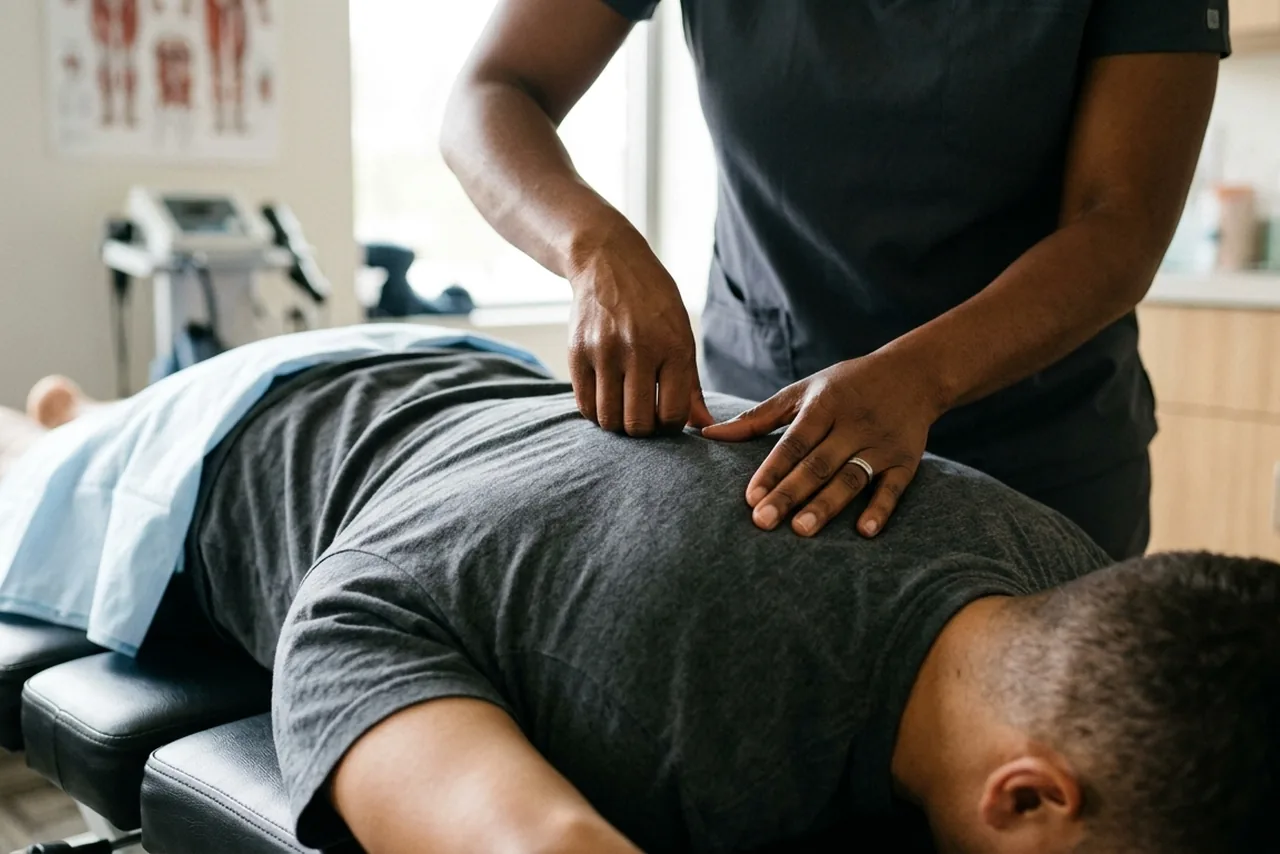
Adjustments & spinal care
For stiff, locked or painful joints in the neck, mid-back, lower back and pelvis.
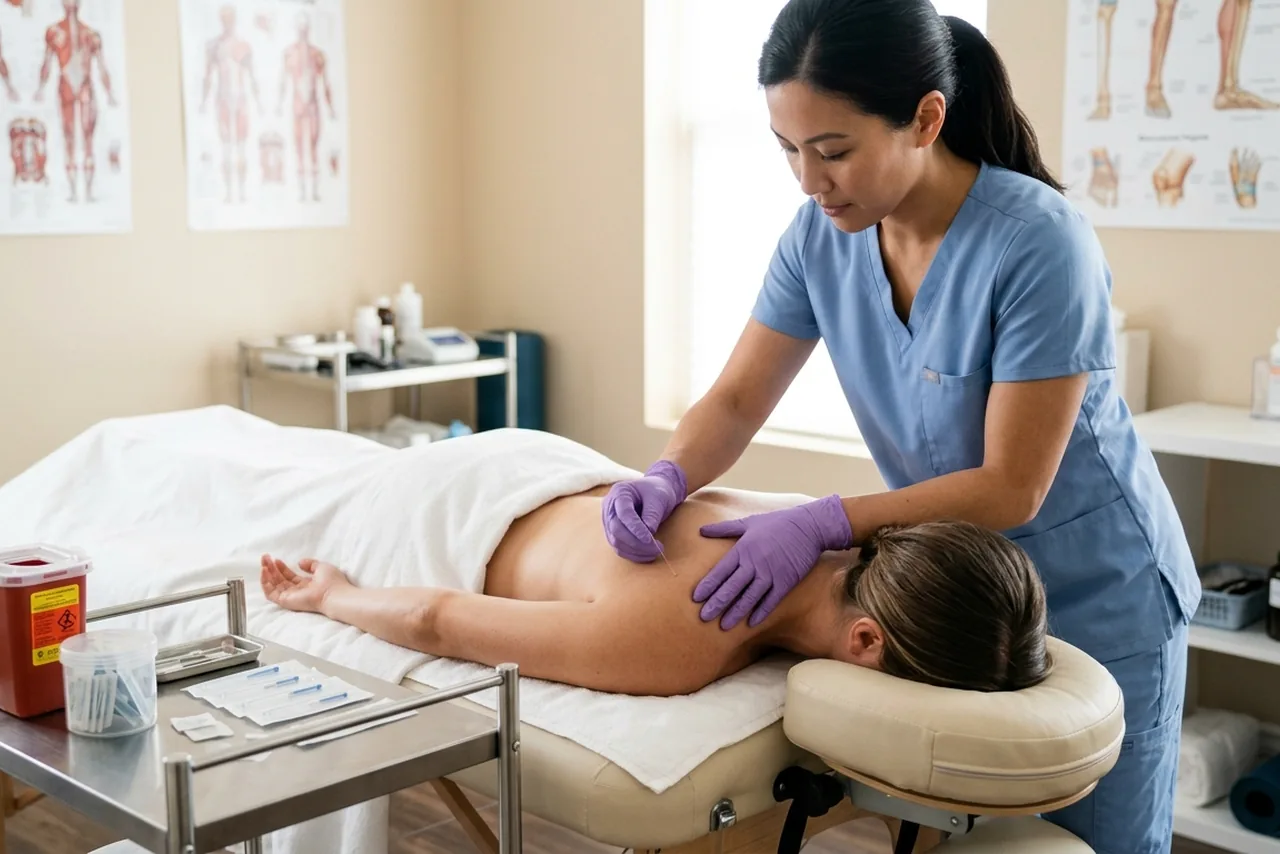
Dry needling & soft tissue work
Releases tight knots and spasm in the shoulders, back and hips when stretching alone won’t.
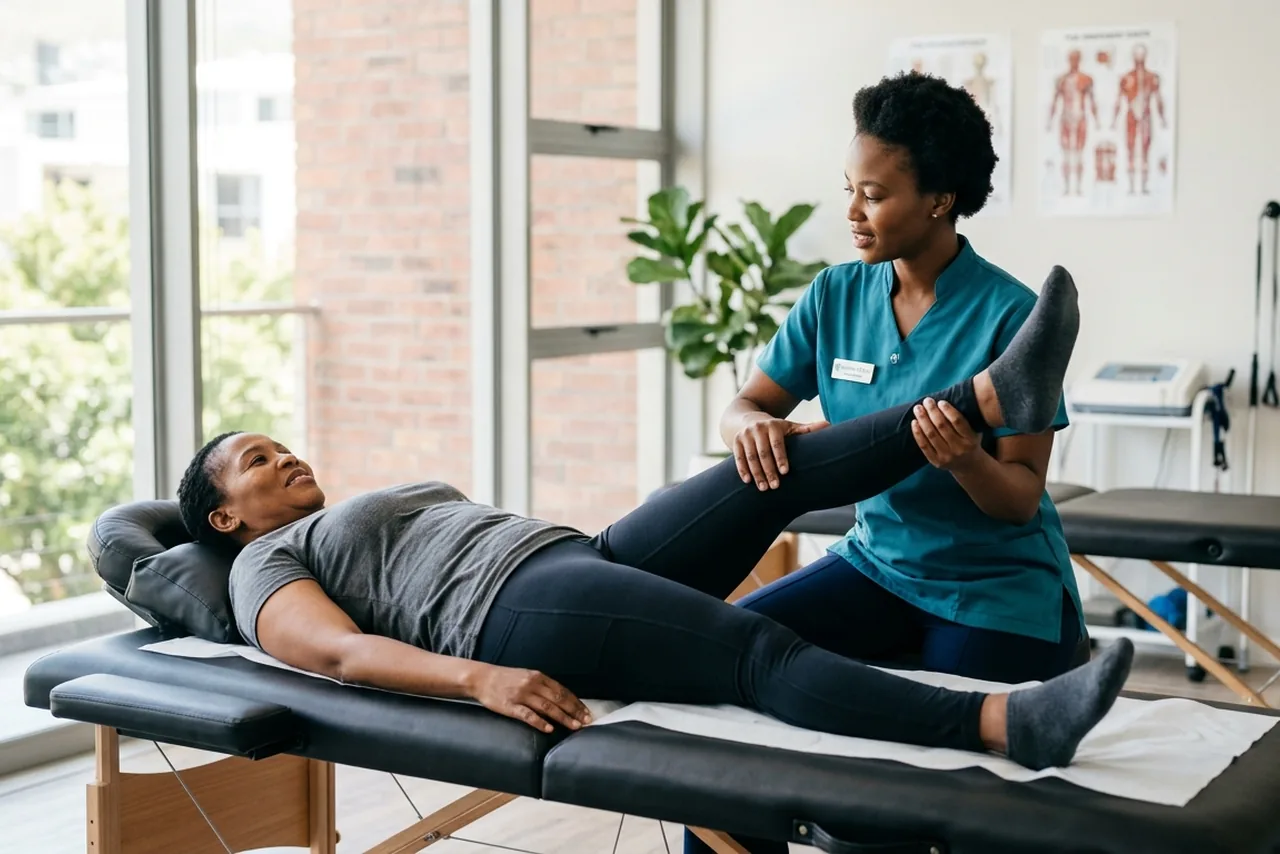
Stretching & mobility rehab
Assisted stretching and simple home exercises to keep you moving between visits.
Let’s talk about your care
Consultations take place at our main rooms at Spark Lifestyle Centre, 98 Cannon Avenue, 5th Floor Medical Suite, Overport, Durban, as well as our scheduled regional satellite clinics.
Request an appointment
Fill this in and we’ll open a ready-to-send WhatsApp message to Dr Bongeka Khumalo’s reception. We reply during consulting hours.